by Currado Malaspina

BY CURRADO MALASPINA

Sunday, December 23, 2018

25 years ago, when my good friend, David Schoffman moved to L.A., he settled in the quaintly treacherous neighborhood of Venice.


Much has changed since then. Most notably, the ease in which one is able to get Thai food delivered.

For a more in depth analysis of these dramatic changes, listen to Timmy Black's most recent podcast! 
 

Sunday, December 16, 2018

A GREAT MIND TAKES A POWDER

A welcome look back at our shared history. My good friend David Schoffman and I go a long way back. Part of me regrets the fact that he recently announced his retirement from painting in order to devote himself, full-time, to his other failed and under-realized artistic endeavors.

I wish him the best of luck but if past is prologue, his hefty Book of Failures will only become more bloated.


Thursday, November 2, 2017

HOLY MOSES!!

For far too many years I've endured the pious outrage of my good friend David Schoffman. Long excluded from the higher echelons of the art world, David has made it his habit to cloak his failure with the tattered cape of class struggle. Unable to find a date to the ball he loudly decried the party as corrupted.

How quickly indignation turns into obsequiousness.

Now that my dear colleague has chosen to face mortality with something more circumspect than a shrug he sees his legacy in grave danger of becoming an object of mockery.

Or worse - pity! 


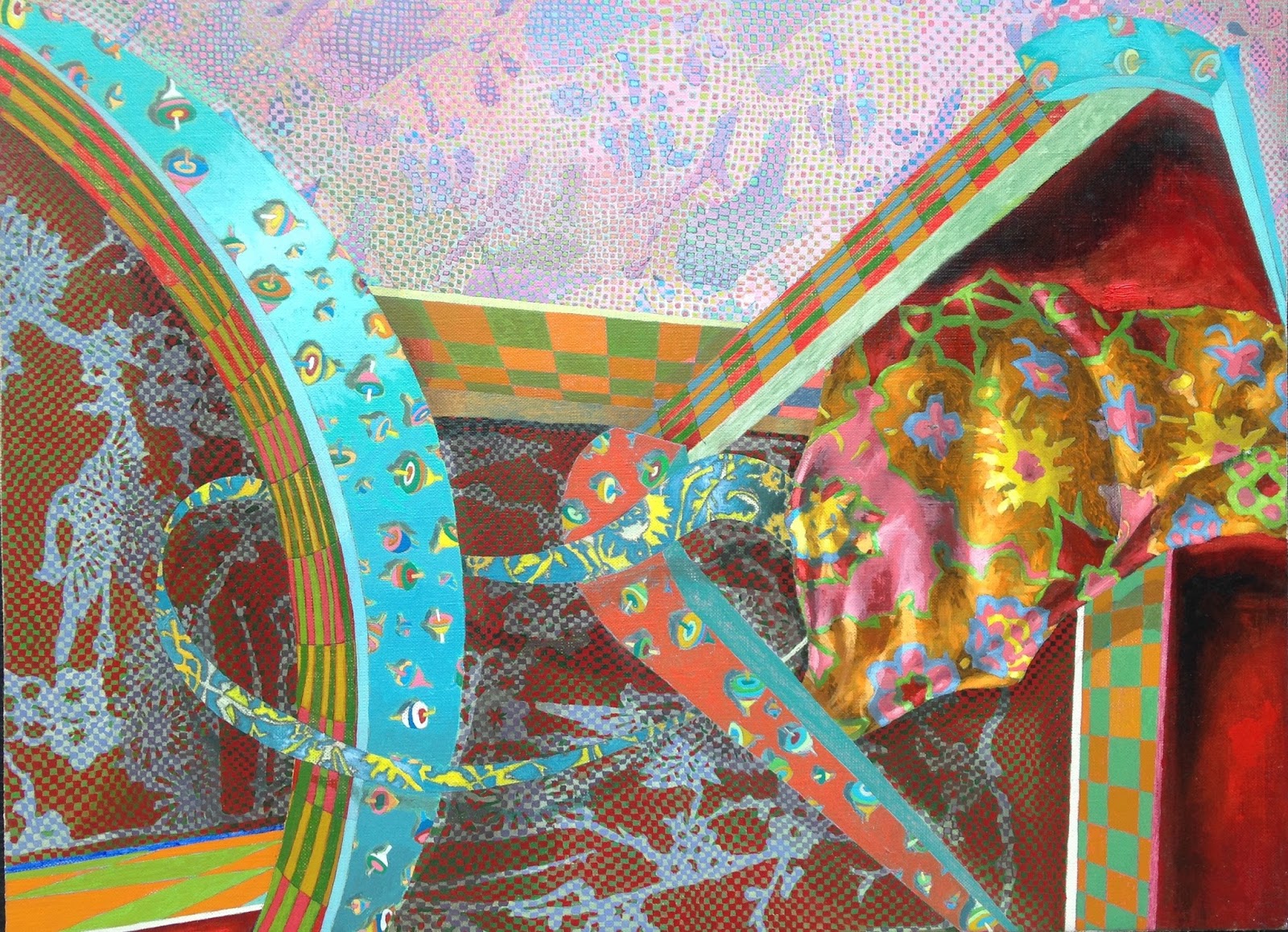
Schoffman, oil on panel, 2016
Recognizing that his own oeuvre is mired in mediocrity he has thrown his beret, his brushes and his sticky block of extra fine Japanese printing ink into the dust bin of 'also-rans.' It is into the den of thieves where he is finding comfort, meaning and money! Schoffman has become an art dealer!! 


Yermi Moïse, date unknown
And not just a simple, shingle at the ArtFair dealer but rather a specialist with a rarified patina of controversial revisionist scholarship (read 'branding'). David's corner is the much overrated, between the wars, École de Paris. Far too late in the game to deal in Soutine, Modigliani, Kisling, Pascin or even Mané-Katz, Schoffman has zeroed in on the lesser known Yermi Moïse. 


Born in Akopinsk in Kharkov Province, Moïse moved to Paris in 1913 in order to avoid being drafted into the Tsar's army. Penniless, he struggled to survive through a variety of marginal trades and harebrained schemes. Most notoriously, he once posed as an exiled prince named Sergei Sergeyevich Goshen Bulgari successfully fleecing the cosmetics heiress Laurance De Bitont out of more than 400,000 old francs. Always one step ahead of the gendarmerie, Moïse disappeared into the bohemian labyrinth of Montparnasse where he met Max Jacob, Jean Cocteau and Pablo Picasso.

Never one to stay in one profession for too long and finding Modernism much easier to master than pickpocketing, Yermi tried his luck as a painter.

Yermi Moïse, oil on canvas, 1924

Yermi Moïse, oil on canvas, 1927


I believe that in 
Moïse, Schoffman has found a kindred spirit. Both are short on talent, long on ambition and deeply ambivalent about the ethical fallout of their hapless misadventures. I wish my friend all the luck in the world.

Honestly, the work of the mercurial 
Yermi Moïse is no better and no worse than most of what is bought and sold today.
Yermi Moïse, oil on canvas, 1927
I even find his paintings oddly touching ...


Friday, August 11, 2017

BOOK REVIEW

My dear friend David Schoffman is a fraud.

Maurice Lanamm, watercolor by Dahlia Danton, undated.
At least that's how the art historian Maurice Lanamm sees it.

In his new discourteous   biography, (Slighted Promise: The Life and Work of David Schoffman), Lanamm paints an unflattering portrait of a man known mostly for his dignified benevolence.

In Lanamm's telling, Schoffman is a pretentious windbag who spends his time painting, teaching and reading long books with complicated sentence structure all in order to manicure his 'brand' and advance his 'career.'

Professor Lanamm is at his worst when he imagines David compiling a list of epigrammatic bullet points and elevator pitches that can be hissed whenever opportunity knocks. 

 " - contemporary art's disruptive pioneer."

" -  formalist torchbearer and thought-leading artisan."

- monastically hermetic yet democratically demotic ."

" - bespectacled, erudite, intellectual urbanite."

" - refined epicurean and impenitent sybarite."

This ridiculous catalog goes on for pages creating a groaning omnibus of diminishing caricatures.

Lanamm tries to uncover what he sees as the transparent nature of Schoffman's insincerity. He is relentlessly prosecutorial, having thoroughly researched old interviews, unrecorded lectures, critical essays, personal correspondences, emails and text-messages. His critique is particularly stinging in light of the fact that Lanamm was once one of David's star students.


Lucija Candidat

Having been a confidante for so many years gave Lanamm the kind of access most scholars only dream of. He begins the book with an intimate account of Schoffman's first wife, the poet Lucija Candidat. 
Though his indiscreet disclosures are entertaining, Lanamm allows these Page Six aperçus to lead him down dark alleys of pop-psychological speculation.  He tells a story of Lucija wanting to move to a bigger apartment, finding their one-bedroom Manhattan walk-up a bit too cramped and inconvenient. David saw it only as "another new place to be tired in" and delayed the process interminably. Lanamm sees this as a leitmotif for David's entire career, citing "his negative, judgmental élan vital that perpetually denuded his empowerment, decelerated his velocity and denied the possibilities for extraordinary breakthroughs." 


Professor Lanamm's book is full of these silly conjectures. His flat prose and meaningless claptrap seldom get past the academic laugh-test. In his lengthy footnotes he often inserts himself into the story, opining on David's personal life like an omniscient narrator. (At one point he urges Schoffman to leave his current wife, Feydeau McCloyen, move to Paris, find a mistress and devote himself to watercolor!) 

It's unclear what Lanamm's motives are. David is a soft, somewhat inert target who, in his near egoless detachment from his own 'personal development' (could this be Schoffman's true 'brand'?!) remains impervious to any attempt at character assassination.  

Maurice Lanamm is a hack who hides behind dubious credentials and a ramshackle institutional forum that allows flimsy scholarship to go unchallenged.


David Schoffman, on the other hand, is a gentle dreamer whose solid accomplishments and unimpeachable integrity remain punishable offenses in the eyes of those who trade in campy, callous, cultural criticism.

Overall, however, the book is a raucous page-turner with juicy tidbits in every chapter. I highly recommend it!


Tuesday, August 8, 2017

DO UNTO OTHERS


My dear friend, David Schoffman, lives in a city that discourages walking. If you're traveling by foot in Los Angeles, unless you're with a dog, you look suspicious . The idea of a pedestrian's "right-of-way" is a form of automotive noblesse oblige and should never be taken for granted.

Walking at night presents a series of hazards of even greater complexity and the innocent flâneur is often mistaken for a tramp


As a European I find this all very strange. 

Many people believe that the cultivation of true friendship is nearly impossible in L.A. because most personal relationships are predicated upon  mutual self-interest. Some attribute this to the culture of Hollywood but I think it's because of all the driving.

Think about it.

Cars are like sovereign nations vying for position, power and prestige.

For the most part they all get along, not out of affection but out of convenience. The rogue road warrior typically receives his comeuppance through the intervention of a militarized arbitrator with a note pad. This way the peace is maintained and the free flow of individuals and goods remains stable and relatively secure.

In Los Angeles, people behave like their cars and see human interaction as an iteration of traffic. I won't get in your way so long as you agree not to get in my way and if we both exceed the speed limit at approximately the same rate, together we can advance our cause toward mutual satisfaction. 

My eccentric colleague David, however, insists on
strolling and likewise expects more from his acquaintances than mercenary social arbitrage. He doesn't care if people like him, he just doesn't like being seen as a professional asset.
You see, deserving or not, Schoffman is a distinguished artistic eminence. He's something of a southern Californian doyen whose range of endeavors puts him into contact with the powerful and the pretty. As a result, everyone wants to be his buddy.

He wants nothing of that.

Though occasionally he'll make an exception.

Dahlia Danton with David Schoffman. Date unknown


Monday, July 24, 2017

BREAD AND WATERCOLOR

When my dear friend David Schoffman appeared recently before a closed door hearing of the House Subcommittee on the Arts and Humanities the wags were quick to point out that he brought along two attorneys - one civil and one criminal.


The presumption of guilt is an unavoidable consequence of lawyering-up. There were no subpoenas, no formal charges and even in the absence of incriminating innuendo, the speculation surrounding David's testimony had a quicksilver scent of charred flesh.

You really find out who your enemies are when your back is against the wall and your painting arm is tied behind your back.


Luckily for David, any hot water he might be in has been easily eclipsed by the Russia Scandal. Besides, who really cares about the matters before an Arts and Humanities investagatory panel.

David would have loved to have held a press conference to clear the air but the press was otherwise disposed. And from a career perspective, bad publicity is by definition good publicity so he was hoping for at least a short hatchet job on NPR.

He had his young colleague Spark Boon tweet about it but Boon has a paltry 900 followers.


 So the affair has basically remained local and the alliances have broken down along partisan lines.

Those disposed toward liking Schoffman and who admire his work are supportive and envious. Those who dismiss David as a derivative lightweight are sharpening their daggers, praying for the worst. There's even a Boycott and Divestment movement that is actively working with curators and collectors, urging them to sabotage his resale value. At a recent board meeting at the Museum of Modern Art a resolution was proposed that would essentially prevent any further acquisitions of David's work.


How this will all turn out is anybody's guess. Till they find a smoking gun, everything is still in the realm of factional speculation.


I know he's growing tired of the whole thing, frustrated that social media has basically treated this rare opportunity like a dangling participle. I heard he may be hiring an intern soon to act as his spokesperson.

Saturday, July 22, 2017

A SHORT HISTORY OF IDEAS


Unfailingly, for the past half century, my good friend David Schoffman would begin each day by reading the failing NewYork Times. It started as a habit and with time it turned into a talismanic ritual. For David, incidents and events, even if witnessed with his own eye, did not verifiably occur until it was reported in the Times. For this superstitious reason and above the reasonable objections of the various interested parties, each of his six marriages were announced in the Sunday Style section.


As a native of Queens, it should come as no surprise that the current American Commander-in-Chief shares a similar obsession with the "paper of record".  And the affinities don't end there. New Yorkers, as if by birthright, assume that bloviating self-aggrandizement is a perfectly unassailable exercise.

Schoffman is no exception.

With a face as stern as an undertaker he will assert to anyone who will listen that he, David Schoffman, is the greatest painter of the age.

"I am the Titian of our time," is his standard boast and it would no doubt prove to be a provocative claim if today's art loving public knew who Titian was. If Schoffman had a shred of marketing savvy he would be comparing himself to Banksy instead.


But of course, that too would ring hollow to our current crop of InstaChatters who might be forgiven if, upon reaching their maturity are no longer able to remember the difference between a Banksy and an Ivan Boesky.

As a Parisian I concede, that to me, the American popular imagination is something of a mystery. Nonetheless, let me submit an innocuous piece of speculation, (and here, I too, find common ground with the current occupant of the Oval Office).

The failing New York Times has indeed failed. It has failed to lift young readers by turning them into skeptical, curious cultural curmudgeons. They seem to have left a fallow furrow only to be cultivated by others less intellectually circumspect. And it is right here where the Trump genius is most manifest.

He has recognized that ours is an age of luster and simplicity. Inoculated from nuance, my American friends have resuscitated the grinning deer from their collective headlights and have turned it into a golden calf. 

Given the choice, perhaps I too would choose the high-fat hedonism of binge streaming to the weighty and excoriating implications of David Schoffman's gravely serious painterly manifestos.

Fortunately, I still live in the land of Sartre and Camus, Lyotard and Baudrillard, Diderot and Derrida, Barthes and Foucault.